
AI-Powered Predictive Portfolio Shielding: Safeguarding Investments Against Volatility
Dec 10, 2025
The architecture of success in Private Equity is undergoing a profound structural reinvention. The era defined by relying solely on arbitrage and high leverage is rapidly drawing to a close. In its place, a more nuanced and complex landscape is emerging, demanding that firms shift from being pure financiers to becoming strategic capability creators focused on deep, operational value.
This pivot is made urgent by external forces: geopolitical volatility, trade tensions, and unpredictable macroeconomic shifts are fundamentally rewriting the calculus of risk management.
In this environment of compounded acceleration, the margin for error has all but vanished. The ability to effectively navigate and neutralize external risks such as tariffs, supply chain disruptions, or shifting international policies is no longer a "nice to have," but the new frontier of Operational Alpha.
This advanced capability is realized through AI-Powered Predictive Portfolio Shielding, turning the seemingly uncontrollable chaos of global trade into a quantifiable, manageable variable. The logic is simple yet profound: if certainty is scarce, strategic foresight becomes the most valuable asset class.
The Core Mechanism: Predictive Foresight and Real-Time Alpha
The power of AI in this context is its ability to integrate and synthesize massive, disparate datasets that defy human processing capacity. This moves the firm beyond backward-looking quarterly reports to a fluid, real-time assessment of risk.
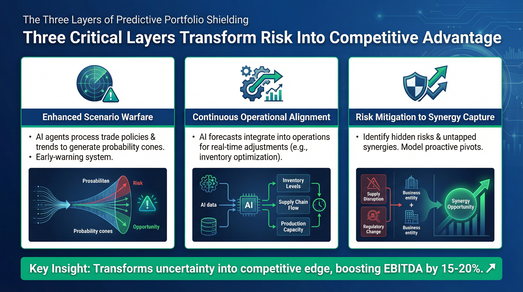
The central mechanism of Predictive Portfolio Shielding operates on three critical layers:
AI agents process current trade policies, political events, and consumer trends to generate probability cones for future outcomes. This involves running simulations to precisely forecast the impact of regulatory changes, market demand fluctuations, or supply chain shocks on specific portfolio company margins and capacity planning. This capability serves as an early-warning system, spotting signals before dashboards typically flag risk.
The forecasts generated by the AI system are integrated directly into the portfolio company's operating rhythm, enabling real-time adjustments. For logistics-heavy portfolios, this might mean AI dynamically optimizing inventory levels and procurement to avoid predicted tariff impacts, leading to reduced costs and improved resilience. The objective is to make execution adaptive, ensuring operational initiatives support the overarching investment thesis moment-to-moment.
The AI's predictive power not only identifies hidden risks, allowing for proactive mitigation measures like diversifying sourcing to politically aligned countries (friend-shoring), but also simultaneously uncovers previously untapped synergies. By rapidly modeling the impact of proactive pivots (e.g., repositioning manufacturing to a lower-tariff region), the firm identifies new avenues for growth and margin expansion that competitors, operating under traditional models, simply miss.
This methodical application of intelligence transforms uncertainty itself into a competitive edge. The operational payoff is measurable and significant: AI-driven strategies that optimize execution lead to measurable EBITDA growth. This proactive approach not only successfully safeguards investments against volatility but also creates demonstrable uplift, potentially boosting EBITDA by 15-20% through smart, real-time operational adjustments. The ability to consistently improve EBITDA margins by hundreds of basis points is recognized as the formula for winning the next decade.
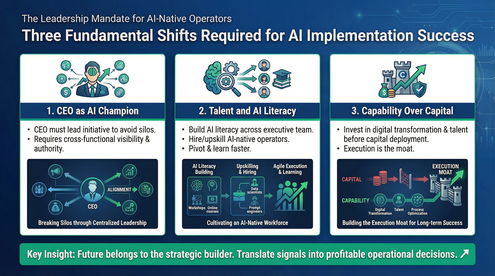
Strategic Command: The Mandate for the AI-Native Operator
The successful institutionalization of Predictive Portfolio Shielding depends not on the sophistication of the tool, but on the capability of the people who wield it.
The leadership mandate in this new era requires three fundamental shifts:
The shift from AI experimentation to operational reality requires the CEO to lead the initiative. Relegating AI adoption to an IT department is a surefire way for the initiative to fail, leading to silos and a loss of business context. The CEO possesses the cross-functional visibility, resource allocation authority, and clear view of top priorities needed to embed this capability across the organization.
Success hinges on building AI literacy across the executive team, making this skillset foundational. PE firms must prioritize hiring or upskilling AI-native operators who can translate data into foresight and design workflows that scale with precision. The ability to pivot and learn faster is the most powerful skill in this environment.
The ability to execute a resilient value creation plan is the true competitive moat. Firms must invest in capabilities such as digital transformation, strong data foundations, and strategic talent before capital deployment, as capital alone is no longer sufficient to guarantee returns.
Conclusion
The future of Private Equity belongs to the strategic builder, not the financial engineer. Predictive Portfolio Shielding is not just a technology solution; it is a declaration that the firm is embracing complexity through foresight and resilience.
Those who master this new intelligence, translating geopolitical signals into immediate, profitable operational decisions, will define the competitive edge. This capability turns market uncertainty into a compounding advantage for resilient value growth.
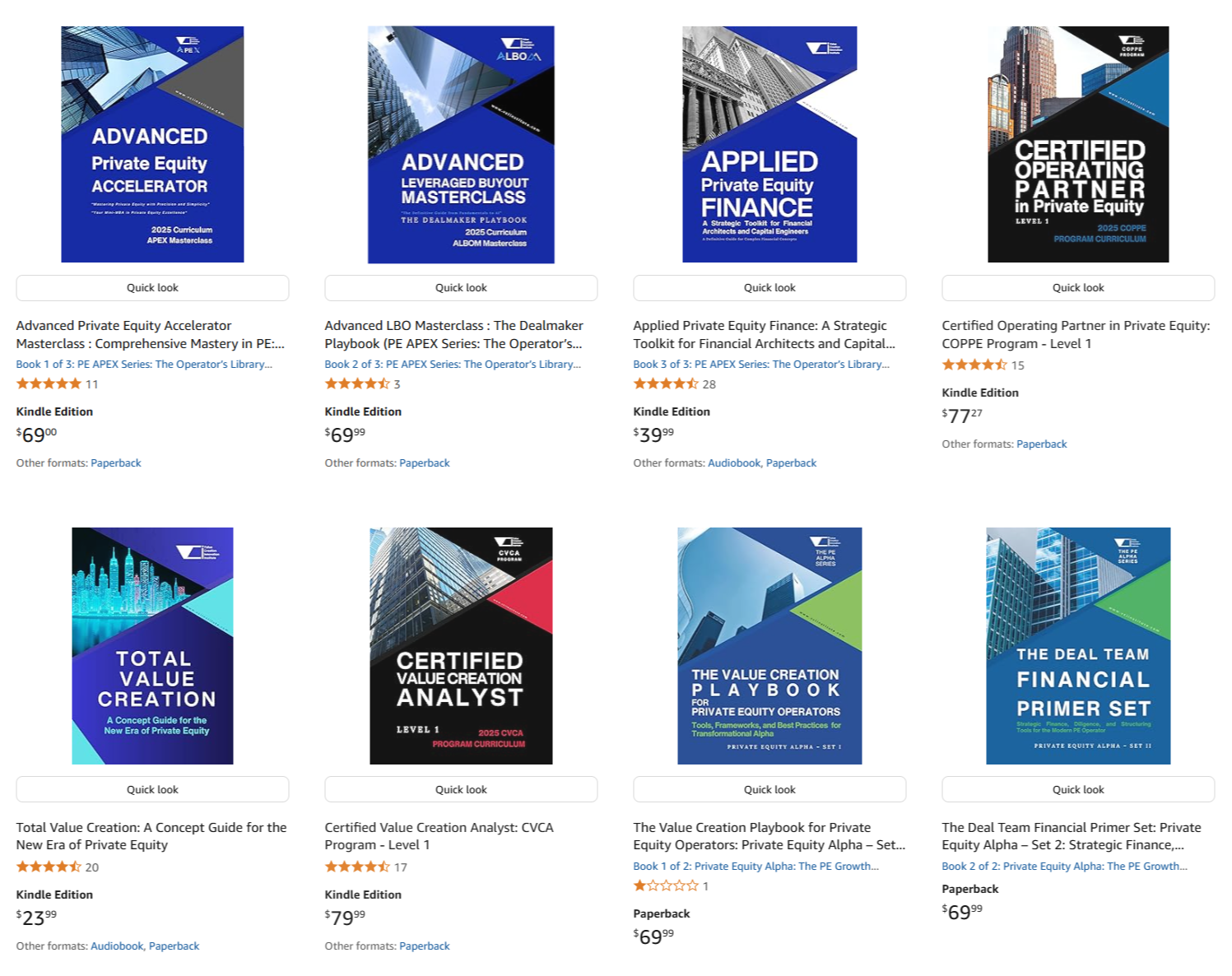
We have many great affordable courses waiting for you!
Stay connected with news and updates!
Join our mailing list to receive the latest news and updates from our team.
Don't worry, your information will not be shared.
We hate SPAM. We will never sell your information, for any reason.
 Practice private equity like a pilot trains