
Private Equity’s Compensation Crisis: Time to Pay for What Truly Drives Returns
Jan 12, 2026
Private equity is at a turning point. While deal teams have long been at the center of firm economics, the true engine of modern value creation has shifted to operations. Today, operating partners are not support staff. They are performance drivers — embedded across the full deal lifecycle, from diligence to exit.
Yet despite this central role, compensation structures have lagged. At many firms, operating partners with equivalent seniority still earn 15–30% less than deal counterparts — and in some cases, receive a fraction of the carried interest that powers long-term wealth generation in private markets.
The Rise of Operations: Value Creation in Numbers
-
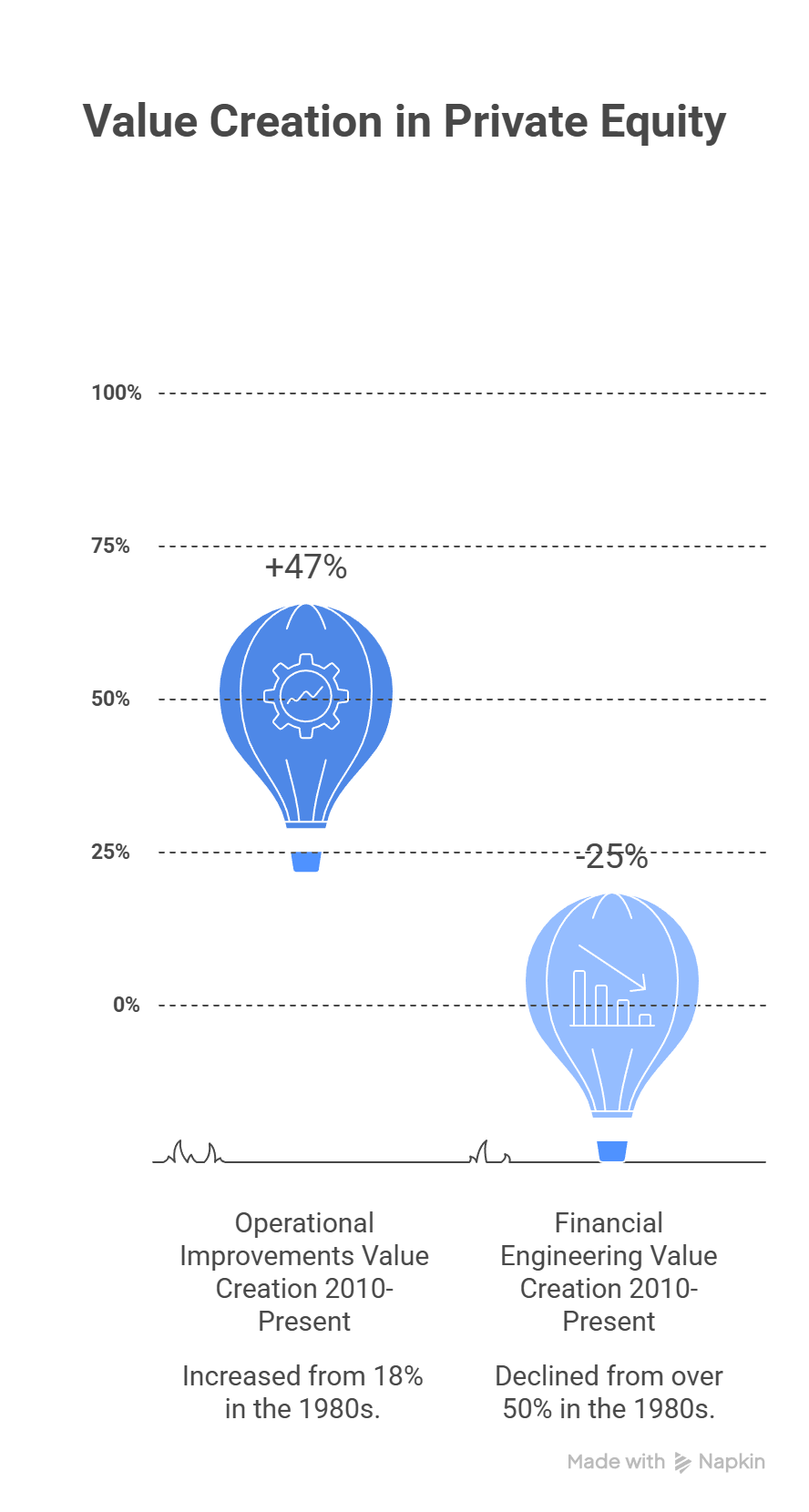
Since 2010, operational improvements have driven ~47% of buyout value creation, up from ~18% in the 1980s.
-
Meanwhile, financial engineering’s contribution has declined from over 50% to ~25%.
-
Operating professionals now drive pricing, digital, talent, and P&L strategy across portfolio companies.
-
Surveys in 2024 showed that value-creation teams are growing in both size and influence, with most mid-to-large PE firms now employing full-time operating professionals.
The Compensation Gap in Numbers
| Component | Deal Partners | Operating Partners |
|---|---|---|
| Base Salary (avg) | $500K–$750K | $500K–$750K |
| Bonus Range | $362K–$1M+ | $123K–$646K |
| Lifetime Carry Range | $16M–$75M+ | $3M–$15M (rarely >$20M) |
The sharpest gap is not base salary — it’s carry and bonus, which can be 30–50% lower despite comparable strategic influence.
Why Misalignment Creates Strategic Risk
-
Talent Retention: Top ops talent is being poached to portfolio CEO roles, corporate strategy, or Big Tech.
-
Cultural Divide: Deal teams retain higher pay and more governance rights, which undermines true partnership.
-
LP Confidence: Investors increasingly ask how value is created. Misaligned incentives weaken credibility.
-
Underperformance: Benchmarking shows firms with strong ops alignment deliver 2–3 percentage points higher net IRR.
How Leading Firms Are Closing the Gap
-
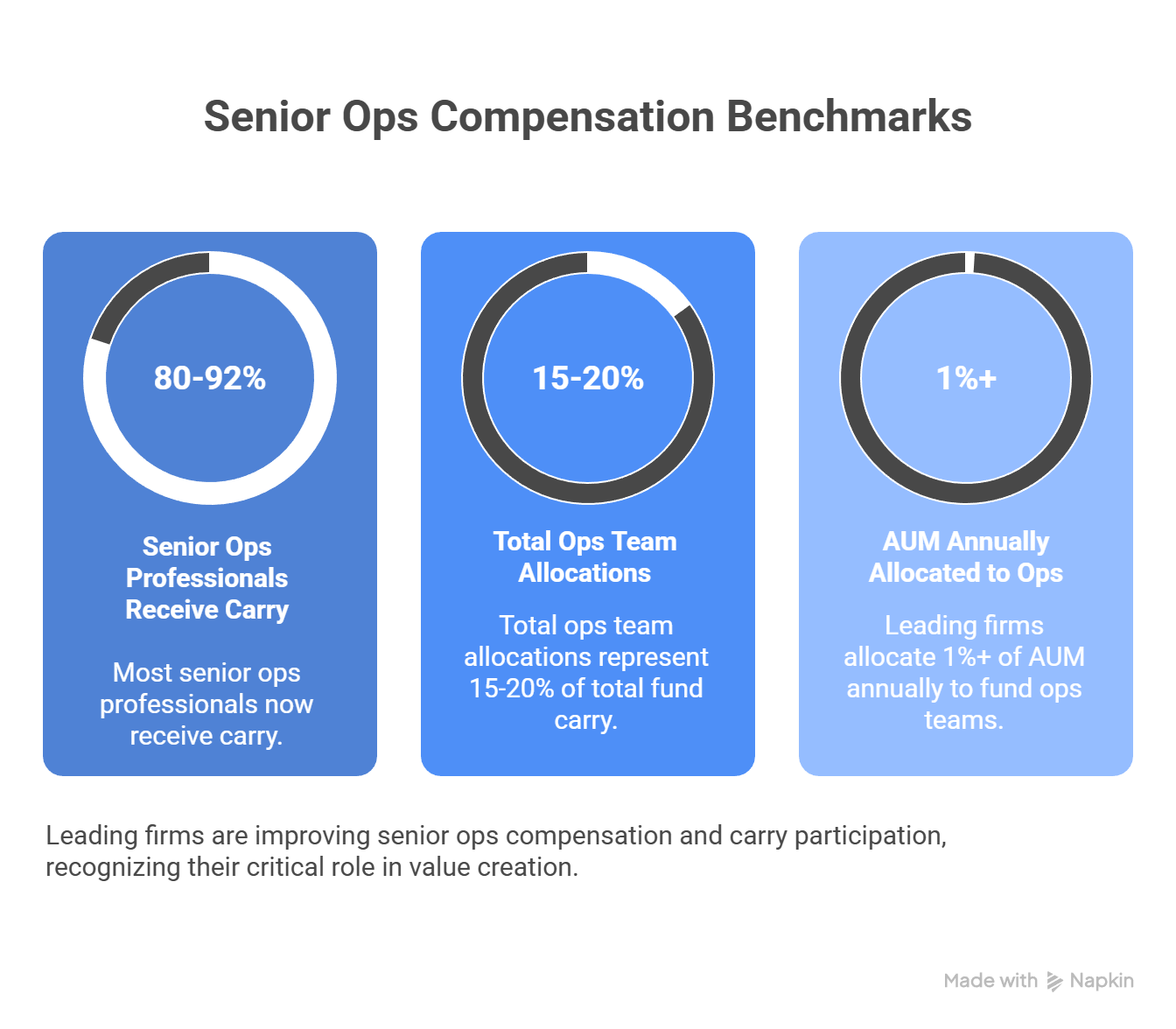
Senior Ops Compensation Benchmarks:
-
Base salary: $500K–$750K
-
Bonus: $250K–$1M, linked to fund returns and operational KPIs
-
-
Carry Participation:
-
80–92% of senior ops professionals now receive carry
-
Individual allocations: 1–3% of the carry pool
-
Total ops team allocations: 15–20% of total fund carry
-
-
Governance & Career Tracks:
-
Operating partners embedded in ICs, boards, and deal screening
-
Transparent career ladders to full partner status
-
-
Dedicated Ops Budgets:
-
Leading firms allocate 1%+ of AUM annually (e.g., $20M–$40M+) to fund ops teams, playbooks, and diagnostics
-
The New Compensation Paradigm
-
Redesign Carry Allocation: Include operating leaders systematically alongside deal professionals.
-
Tie Compensation to Outcomes: Use quantifiable metrics — EBITDA growth, margin expansion, digital transformation — to drive bonus and carry vesting.
-
Institutionalize Career Paths: Offer operating partners a clear trajectory to partner status, governance seats, and long-term wealth creation.
-
Fund Ops as a Core Product: Don’t treat operations as a cost center. It is the product.
VCII Bottom Line
In a world where operational alpha explains nearly half of buyout value creation, underpaying operating leaders is not just inequitable — it’s inefficient.
Firms that get this right are:
-
Winning the talent war
-
Delivering stronger portfolio outcomes
-
Signaling credibility to LPs
-
Outperforming peers on returns
Firms that don’t? They’re leaving value on the table.
VCII 2025 CopyRighted Material.
We have many great affordable courses waiting for you!
Stay connected with news and updates!
Join our mailing list to receive the latest news and updates from our team.
Don't worry, your information will not be shared.
We hate SPAM. We will never sell your information, for any reason.
 Practice private equity like a pilot trains