
The Ninety Second Test: Why Your Value Creation Bridge Does Not Close
Aug 29, 2026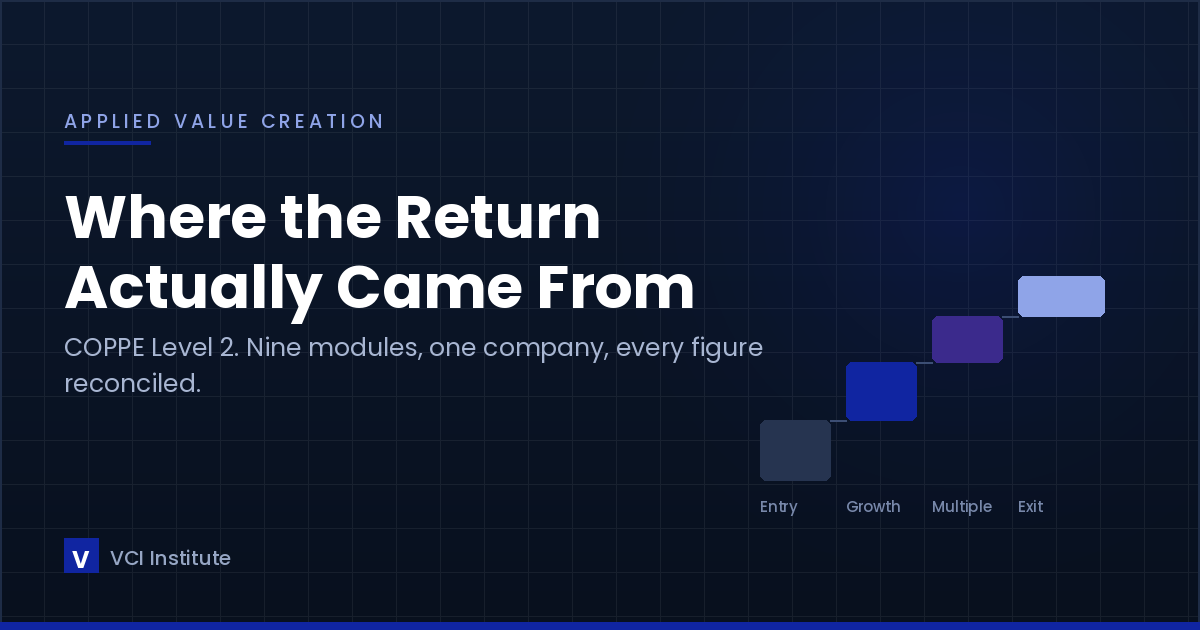
Here is a test you can run on any value creation deck in about ninety seconds. Find the page that explains where the return came from. Add up the components. Compare the total to the equity proceeds at exit.
If the two numbers are not identical, something in that analysis is wrong. Not approximately wrong. Wrong in a way that means at least one component is using the wrong multiple, and therefore the credit is being allocated to the wrong people.
Run this test often enough and you will find that the bridge frequently does not close, and that nobody in the room had noticed.
The three components, and why only two are yours
Any leveraged return decomposes into three parts.
Earnings growth. The EBITDA you added, valued at the multiple you paid. This is the operating team's number, and it is the one most plans are built to move.
Multiple movement. The change in multiple, applied to exit EBITDA. This is the market's number. It is informed by evidence you created, but it is ultimately set by a buyer who does not work for you.
Deleveraging. Opening net debt less closing net debt. Cash that arrived and was applied. It requires nobody's agreement, which is precisely what makes it the most reliable of the three.
Two of those are under operating control. One is not. A plan that depends heavily on the third is a bet on the market wearing the clothing of an execution plan, and the distinction matters enormously when the market does not oblige.
The convention nobody states, that changes the answer
Here is where most analyses quietly go wrong.
Earnings growth can be valued at the entry multiple or at the exit multiple. Both are defensible. They produce materially different splits between the growth column and the multiple column, and the interaction term has to be assigned somewhere.
Choose entry, assign the interaction to multiple movement, and the operating team looks less impressive than they were. Choose exit, and they look more impressive. Nothing about the business has changed. Only the convention has.
The failure is not choosing one. The failure is not stating which one you chose, or worse, mixing them inside a single analysis so that the components no longer sum to the total. That is exactly what the ninety second test catches.
The check that must hold
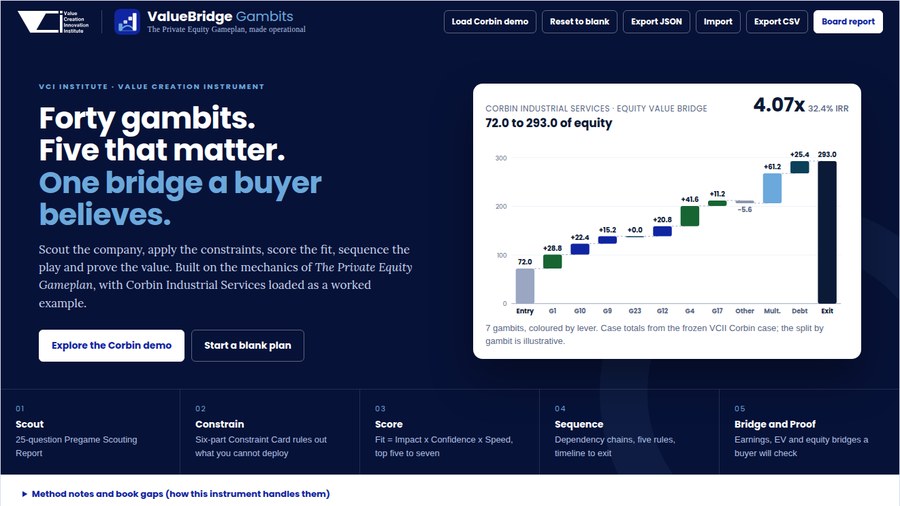
Sponsor cheque, plus earnings growth, plus multiple movement, plus deleveraging, less fees, equals exit equity proceeds.
If it does not, one of the components is using a different multiple from the others. There is no third possibility. This is not a rounding question.
The second error, which costs more
Returns are measured on the sponsor cheque, not on entry equity. These are different numbers and confusing them systematically overstates performance.
Entry equity is enterprise value less net debt. It is what appears in the enterprise value bridge. The sponsor cheque adds transaction fees, and it is what the fund actually wrote.
Divide exit proceeds by entry equity instead of by the cheque and you will report a multiple of invested capital that nobody actually earned. On a deal with meaningful fees this is not a small distortion, and it is common enough that we built it into the free calculator as a separate line, purely so people can see the gap between the two.
Why we built a whole certification around this
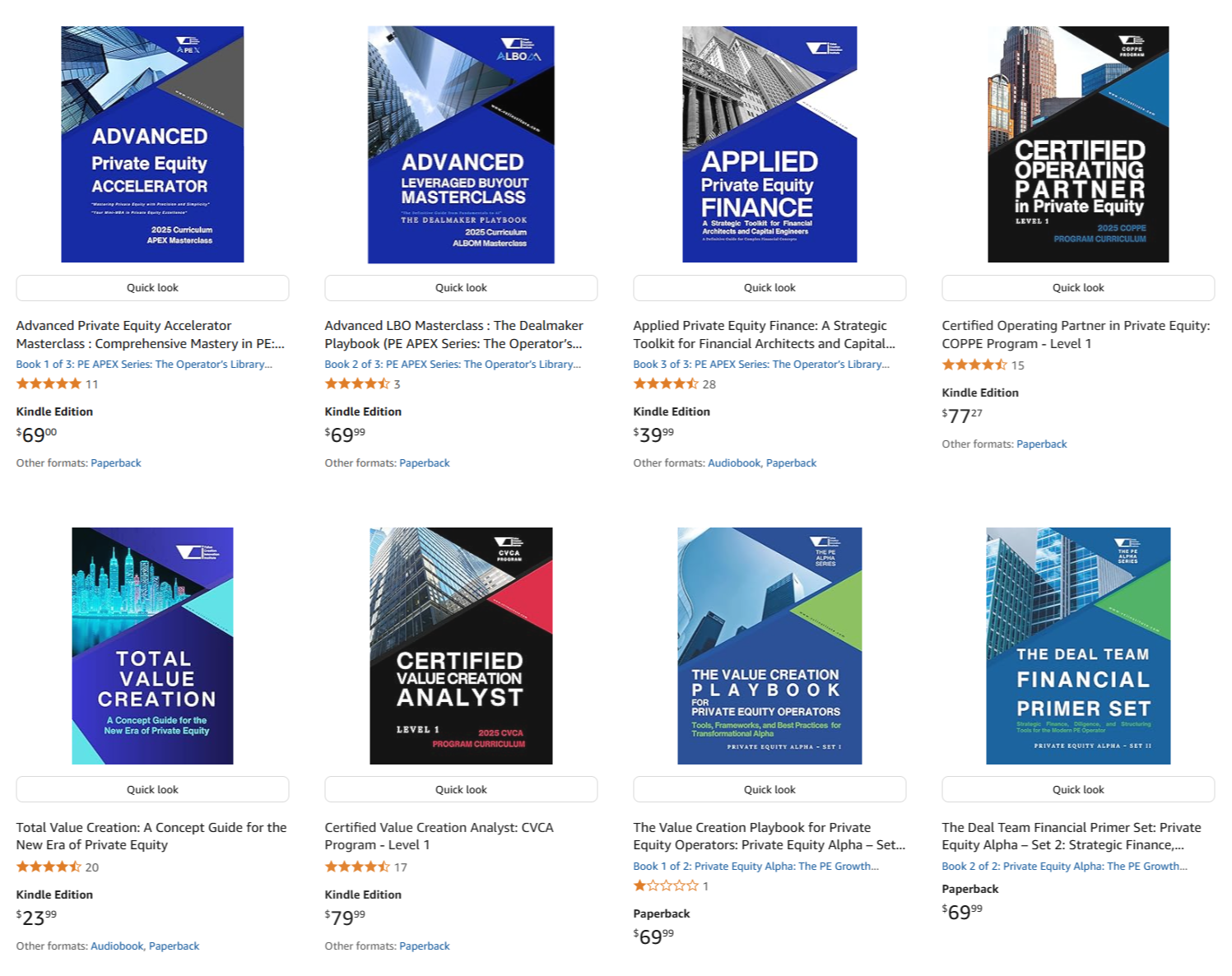
COPPE Level 1 teaches the language and the levers. It is the operator's entry point and it does that job well.
But there is a gap between speaking the language and being able to build the numbers from raw financials while somebody senior watches. That gap is where careers stall, and it is not closed by reading more frameworks.
COPPE Level 2, Applied Value Creation, is now available. Nine quantitative modules, one company held from the first module to the last, across a full five year hold. Quality of earnings, capital structure, the revenue engine, the margin engine, the cash engine, the multiple, accelerants, and exit back design, each one built rather than described.
Every module opens with a twenty question checkpoint, deliberately placed before the material rather than after it. Scoring badly on something you have not studied is the point: it tells you where to concentrate.
Before the capstone sits a calculation workbook of thirty problems built on a second company, deliberately different from the case, so that it cannot be passed from memory. If you can work through that workbook unaided, you are ready for the room.
Try the arithmetic before you buy anything
The LBO Returns Calculator is free, needs no account, and runs entirely in your browser. Put in a deal and it returns MOIC, IRR and the full three way attribution. It runs the reconciliation check on every result and tells you when the bridge fails to close.
What to do on Monday
Take the most recent value creation deck you have access to. Find the attribution page. Add the components and compare the total to exit equity.
If it ties, ask which multiple growth was valued at, and whether that convention is used consistently across every deal in the portfolio.
If it does not tie, you have just found something worth raising, and you found it in ninety seconds. That is the entire value of knowing this one check.
Published by VCI Institute. The Institute produces certification programmes, books and tools for operating partners, deal teams and portfolio company executives.
Related reading
We have many great affordable courses waiting for you!
Stay connected with news and updates!
Join our mailing list to receive the latest news and updates from our team.
Don't worry, your information will not be shared.
We hate SPAM. We will never sell your information, for any reason.
 Practice Platform