
The energy transition story in private equity has been dominated by a category that captures the imagination but represents a small fraction of where the actual capital needs to flow. Climate tech, de...
Most value creation frameworks are lists. Five levers, seven pillars, ten plays. They are satisfying to read, easy to present, and they fail in the same way every time.
They tell you what you could d...

For most of the past decade, defense and defense-adjacent technology sat in the exclusion column of mainstream private equity. The reasoning was familiar. ESG screens flagged the category. LPs preferr...

Most private equity firms have a talent network. They maintain relationships with executives across industries, function specialists who can be deployed for specific projects, advisors who can be brou...
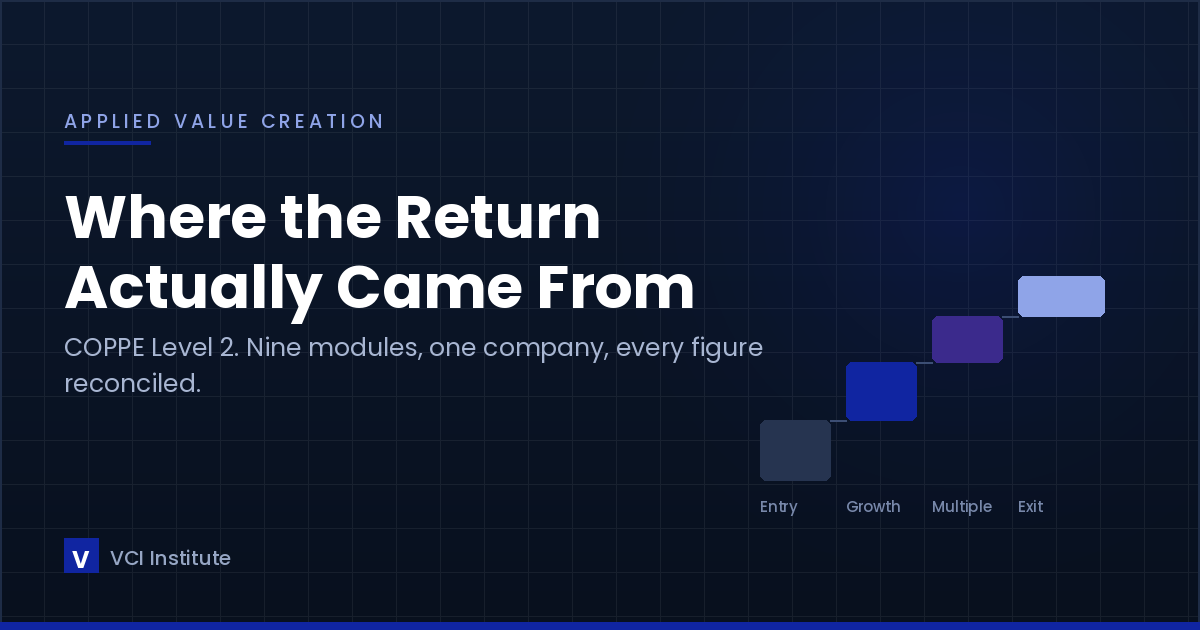
Here is a test you can run on any value creation deck in about ninety seconds. Find the page that explains where the return came from. Add up the components. Compare the total to the equity proceeds a...

Most private equity portfolio company boards are performance theatre. The format is familiar. A monthly or quarterly meeting. A management presentation that tracks against the value creation plan. A d...

The most important relationship in any private equity portfolio company is between the operating partner and the CEO. It is more important than the relationship between the deal partner and the CEO, m...

The first major talent decision in most private equity deals is what to do about the CFO. The decision is not always conscious. It is sometimes triggered by a clear signal from the management team tha...

Of all the value creation levers private equity firms can pull on a portfolio company, pricing power is the most consistently underweighted in underwriting models and the most consistently underestima...
Ask a room of investment professionals who builds the value creation analysis, and you will get a shrug. Somebody does it. It is rarely one person, it is almost never a defined role, and it is usually...

Customer concentration is one of the most universally measured risk metrics in private equity diligence. Every CIM addresses it. Every diligence report includes a chart of revenue by top customer. Eve...
Carve outs have been a celebrated category of private equity deal sourcing for decades. The narrative is appealing. A subsidiary inside a larger corporation has been under-managed, under-invested, and...

Roughly half of mid-market private equity transaction volume in 2026 is sponsor to sponsor. The buyer is a private equity firm. The seller is a private equity firm. The asset has been through one or m...

The dividend recapitalization has returned to the private equity playbook with renewed intensity over the past eighteen months. The reason is not subtle. With exits slowed, DPI weak, and LPs pressing ...

A decade ago, separately managed accounts and fund-of-one structures in private equity were rare exceptions, used mostly for the largest sovereign wealth funds and a small number of strategic LPs that...

 Practice private equity like a pilot trains