

Resilience Recalibration Funds: Adaptive Strategies in Fragmented Markets
Dec 10, 2025
The architecture of success in Private Equity has entered a new phase defined by complexity and compression. The model that thrived on predictable variables is rapidly losing its potency. In this environment, where the margin for error has vanished, purely financial engineering alone no longer guarantees superior returns.
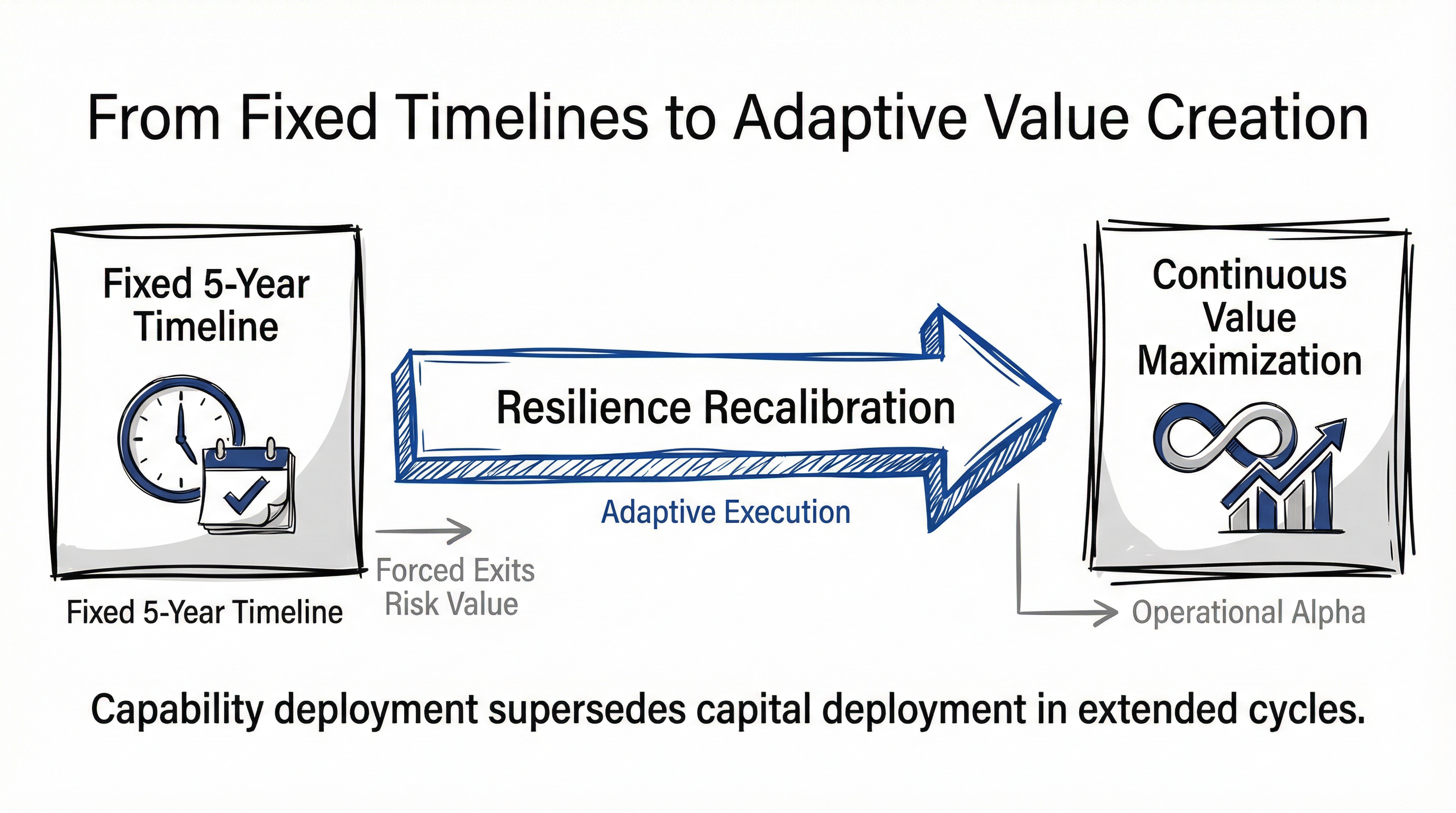
This structural change has manifested most acutely in the exit function of the investment lifecycle. Deal exits have slowed, valuations have compressed, and traditional five-year holding periods are being aggressively stretched. Forcing a premature exit from a fundamentally sound company risks sacrificing significant unrealized value simply to meet rigid fund timelines.
The market response to this inflexibility is the emergence of adaptive vehicles designed for endurance, what we term the Resilience Recalibration Fund. This is not a static fund structure, but rather an execution methodology and financing architecture built around the necessity of extending timelines productively.
The Dynamic Core: AI and Adaptive Execution
A Resilience Recalibration Fund operates under the premise that the investment thesis is a hypothesis that must be rigorously rechecked against operational reality. The engine that drives this recalibration is the integration of advanced data and Artificial Intelligence (AI) into daily operations, creating a real-time command center for portfolio leaders.
Key AI-driven functions enabling this adaptive strategy include:
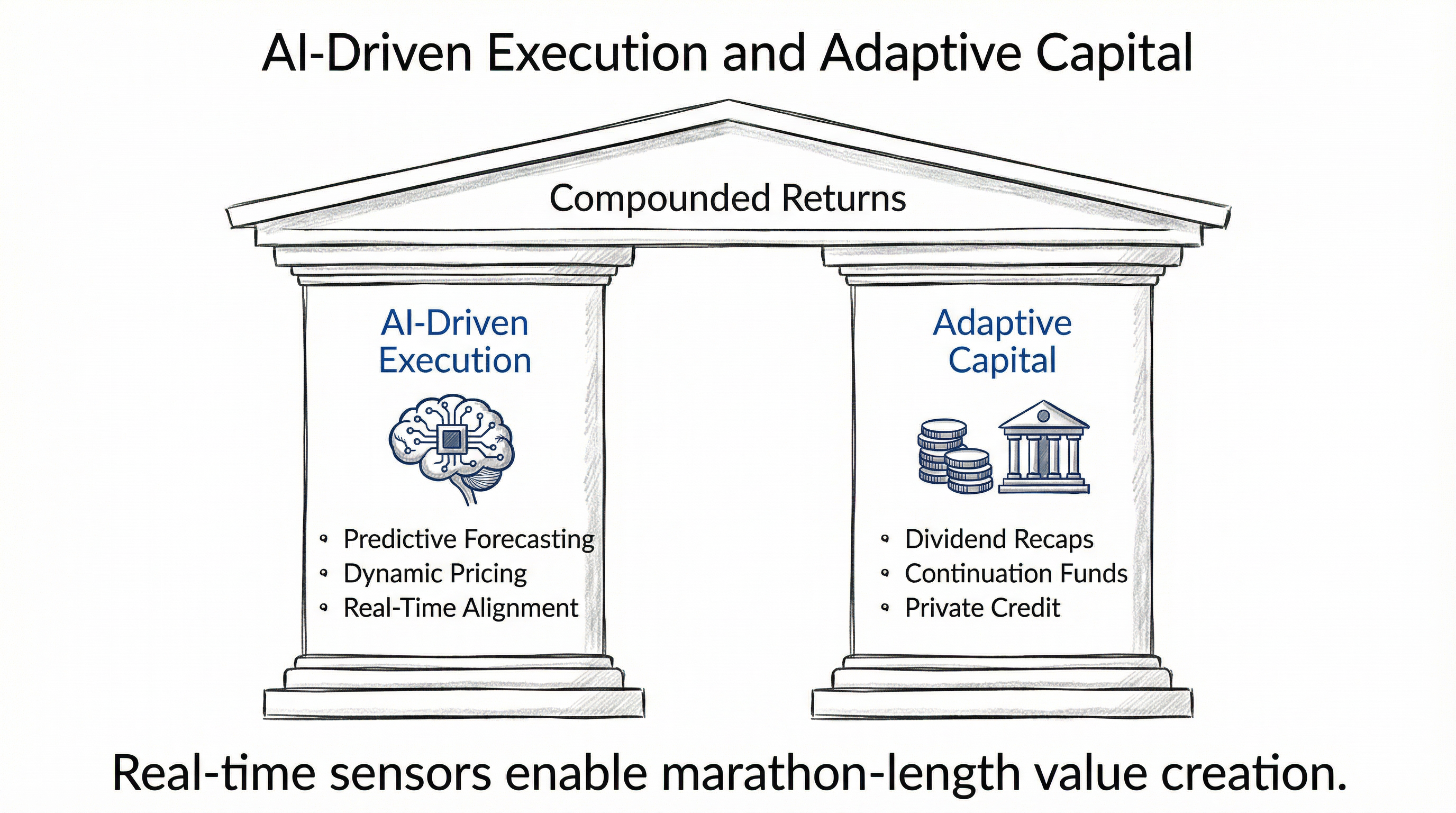
- Predictive Forecasting: AI models move beyond historical reporting by generating predictive insights into critical performance variables, such as market trends, potential downtime, and customer churn.
- Dynamic Pricing and Optimization: Through real-time data analysis, AI engines refine pricing strategies based on inventory, demand shifts, and customer behavior, driving profit margins through precision.
- Real-Time Alignment: Data visualization platforms provide continuous visibility, allowing leaders to quickly identify where performance is stalling and pivot confidently.
By leveraging these insights, the portfolio company can execute AI-driven pivots that accelerate value creation. The focus shifts from executing a rigid plan to applying immediate operational tweaks that consistently compound value.
The Role of Capital Structure in Resilience
The second pillar of the Resilience Recalibration Fund is the evolution of capital structures to accommodate patience and provide necessary liquidity solutions. In this model, capital deployment is secondary to capability deployment.
The inflexibility of a traditional fund structure is mitigated through sophisticated financial tools:
- Customized Liquidity Solutions: Firms use strategies like dividend recapitalizations, where the company takes on new debt to distribute capital back to investors without forcing a sale.
- Continuation Vehicles (Secondaries): Continuation funds allow General Partners to move a successful asset from an expiring fund into a new vehicle, offering LPs the option to cash out or roll their interest.
- Private Credit Integration: As traditional bank financing faces scrutiny, private credit is becoming a primary source of capital, offering flexible, tailored financing solutions that speed up execution.
The adaptive strategy embodied by Resilience Recalibration Funds is akin to a marathon runner training with real-time biometric sensors: they constantly adjust their effort based on immediate data, ensuring they maximize performance right up to the finish line, no matter how long the race becomes.
This adaptive blend of patient capital and flexible debt allows firms to extend holding periods productively, maximizing value creation rather than being forced into rushed exits. The focus on operational alpha, which now contributes over 55% of value creation, ensures that the extended timeline is utilized for fundamental business building.
In conclusion, the Resilience Recalibration Fund represents the existential shift of Private Equity from being purely financial engineers to being strategic capability creators. By institutionalizing AI-driven foresight and embedding adaptive financial structures, firms navigate market fragmentation not by avoiding risk, but by engineering a reliable path for value velocity that delivers compounded returns over the long term.
Next step
Practise before the deal is real
The PE Simulator lets you practise the full private equity deal lifecycle, from sourcing to exit. Start with the free 10-minute demo, no sign-up. Try the free PE Simulator demo
Related reading
We have many great affordable courses waiting for you!
Stay connected with news and updates!
Join our mailing list to receive the latest news and updates from our team.
Don't worry, your information will not be shared.
We hate SPAM. We will never sell your information, for any reason.






 Practice Platform