Nobody Practises Private Equity: The Case for a Simulator
Sep 26, 2026
Pilots train in simulators before they carry passengers. Surgeons practise before they operate. Traders run paper books before they run real ones.
Private equity has no equivalent. People learn to allocate capital by allocating capital, and the first several times they are wrong it costs somebody real money.
We accept this because there has never been an alternative. That is a poor reason.
Why reading does not transfer
You can read every book written about leveraged buyouts and still freeze the first time you have to choose between two initiatives with a covenant test approaching.
The reason is that reading and deciding use different faculties. Reading gives you the shape of the answer once someone else has already worked out which facts mattered. Deciding requires you to work out which facts matter, under time pressure, with incomplete information, while somebody senior watches.
Case studies are closer, and still not the thing. A case study is a decision reconstructed after the outcome is known, which means the relevant facts have already been separated from the irrelevant ones by the person who wrote it. That is precisely the hard part, removed.
What the missing skill actually is
The skill nobody teaches is not analysis. It is allocation under constraint.
You have limited management attention, limited cash, and a fixed hold period. Six initiatives are defensible. You can execute two properly or five badly. The pricing initiative pays back fastest but requires a commercial team that is not yet capable. The working capital release is certain but modest. The acquisition is transformative and would take most of the year and all of the goodwill.
There is no formula. The judgement is in the trade-off, and the trade-off can only be learned by making it repeatedly and seeing what happens.
In a real portfolio company you make that trade-off perhaps twice in a hold period, and you find out whether you were right several years later, by which time so many other things have changed that the lesson is ambiguous. That is an extraordinarily slow feedback loop for something so consequential.
The objection worth taking seriously
A simulator is a model, and a model is a simplification. Real businesses have politics, personalities, a chief executive who is unconvinced, and a chief financial officer who takes three weeks to produce a number. None of that is in the model.
That objection is correct and it is not disqualifying. A flight simulator does not reproduce the fear. It reproduces the instrument scan, the sequence, the decision structure under load, and that turns out to be most of what transfers.
The same holds here. What a simulator teaches is which variables move together, how quickly a covenant problem develops from a revenue problem, what deleveraging actually contributes, and how it feels to commit attention you cannot get back. Those all transfer. The politics you will still learn the hard way.
PE Simulator
This is the reason PE Simulator exists, built as a joint venture between Valuethropy and VCI Institute.
It puts you in the seat where capital allocation decisions have consequences you can watch land on earnings, cash and enterprise value, and it lets you make those decisions many times rather than twice. Nine desks, eight practice arenas, four AI advisors, one connected deal running from sourcing to exit.
There is a free timed demo. No signup, no card, about ten minutes.
PE Simulator
Be wrong where it costs nothing
Practise capital allocation under constraint and watch the consequences land on earnings, cash and enterprise value. The model reacts to every call you make, and an AI advisor tells you what a partner would have done differently. Solo vs AI available now — live multiplayer with teammates is coming soon.
Where the certifications fit
Practice without structure produces confident habits rather than good ones. You need both: a framework that tells you what to look at, and repetition that teaches you what to do about it.
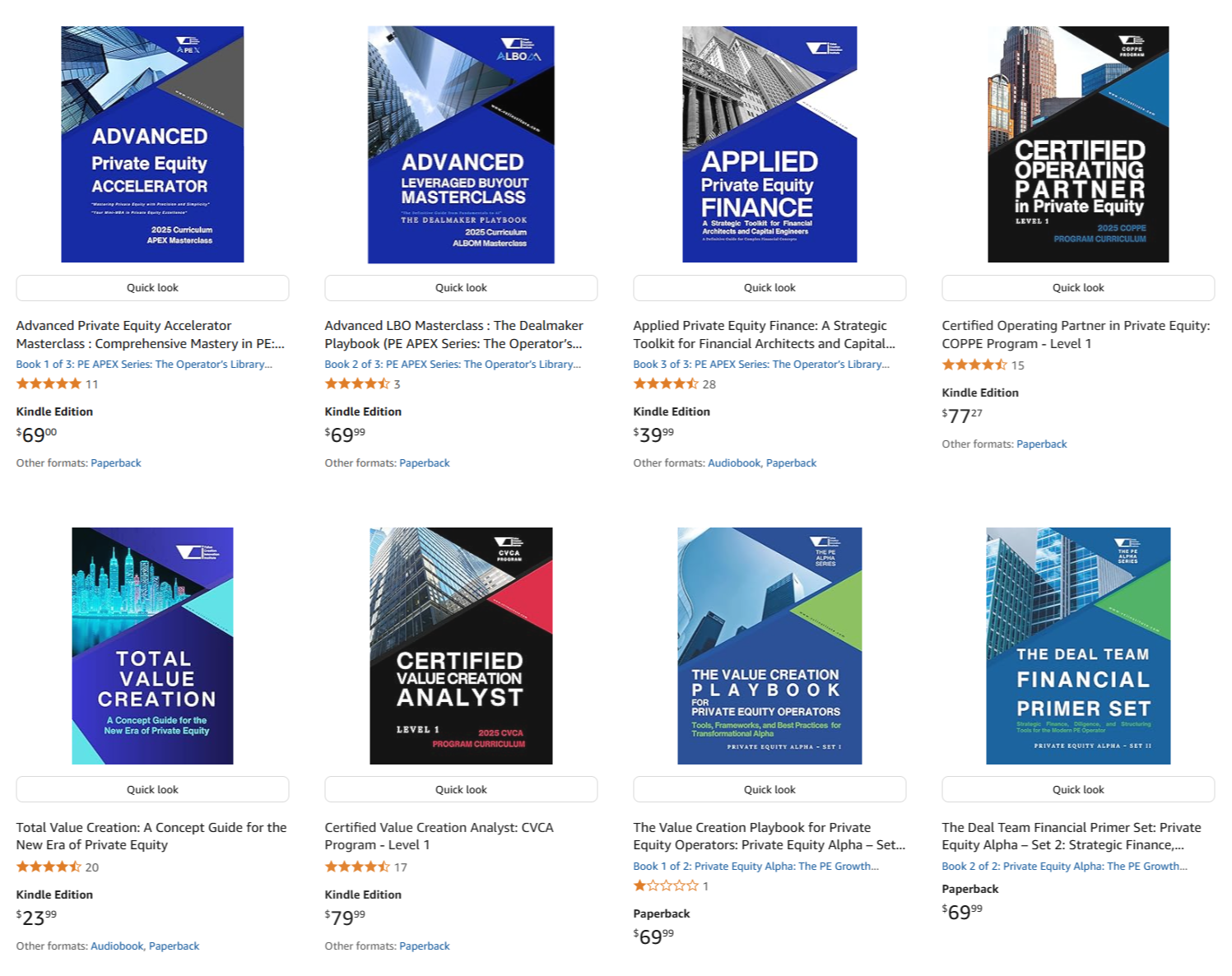
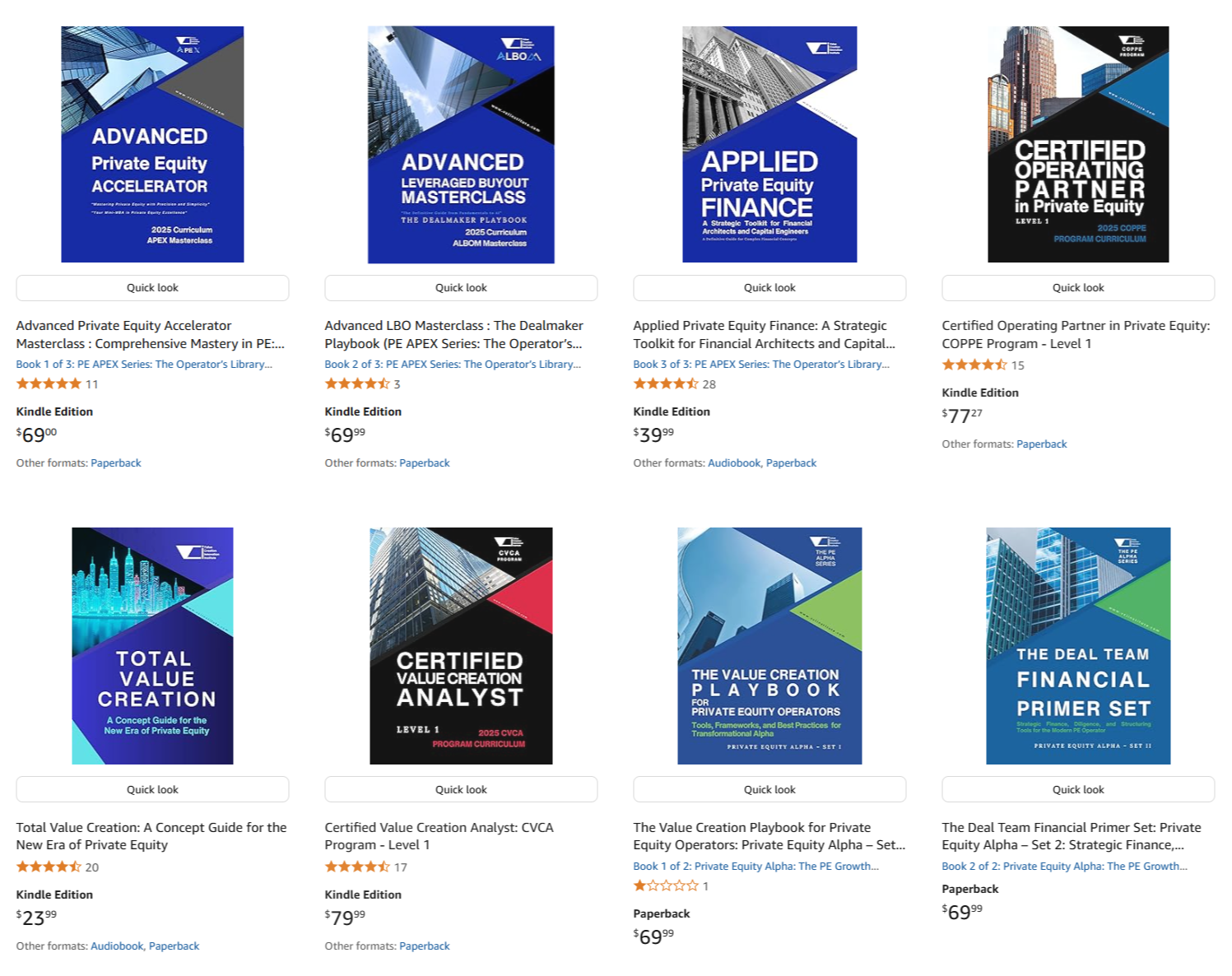
The certifications supply the first. COPPE builds the operating discipline and the arithmetic behind it. CVCA builds the analysis. The simulator supplies the second, which is the repetition that no reading provides. Three months of Simulator access is included with COPPE Level 2 and CVCA Level 2, which is the cheapest route to both halves at once.
If you want to start with something free, the LBO Returns Calculator will show you how a return decomposes into earnings growth, multiple movement and deleveraging on any deal you put into it. It is the smallest possible version of the same idea: change an input, watch what moves.
Published by VCI Institute. PE Simulator is a joint venture between Valuethropy and VCI Institute.
Related reading
We have many great affordable courses waiting for you!
Stay connected with news and updates!
Join our mailing list to receive the latest news and updates from our team.
Don't worry, your information will not be shared.
We hate SPAM. We will never sell your information, for any reason.

 Practice private equity like a pilot trains