
Most private equity portfolio company boards are performance theatre. The format is familiar. A monthly or quarterly meeting. A management presentation that tracks against the value creation plan. A d...

The most important relationship in any private equity portfolio company is between the operating partner and the CEO. It is more important than the relationship between the deal partner and the CEO, m...

The first major talent decision in most private equity deals is what to do about the CFO. The decision is not always conscious. It is sometimes triggered by a clear signal from the management team tha...

Walk into any mid-market portfolio company on a Monday morning, ask three different functions for the same number, and you will receive three different answers.
Sales will tell you that the company ha...

The first ninety days after close are the most expensive window in private equity for losing people. Not the people with the loudest titles. The people who actually make the business work. They are us...
Most operating partners intervene before they diagnose. They arrive at a portfolio company with a playbook in their head, a set of standard interventions they have run successfully before, and a presu...
Private equity has a recurring blind spot. It pays a premium for founder-led businesses because they grow faster, decide faster, and convert customers faster than their corporate equivalents. Then it ...
The 100-day plan is one of the most universally adopted, universally underperforming artifacts in private equity. Every fund has one. Every IC memo gestures at one. Every operating partner is handed o...

Most private equity value creation plans are not designed to be executed. They are designed to win an investment committee.
The short answer
The people who write the value creation plan and the peopl
...
Consider a landscaping company in the southeast. Standard mid-market deal. Twelve trucks, a hundred and twenty customers, mostly residential, some light commercial, the founder still showing up on Sat...

Every board meeting in 2026 contains the same scene. The chair turns to the CEO and asks the question that has now become ritual. What is your AI strategy? The CEO produces a slide. There is a vendor ...
The clearest signal of where a private equity firm sits on the operating partner question is not on the website. It is in the carry distribution. Firms that allocate carry to operating partners on par...

The age of “advisor OPs” is over. Value is engineered, not advised. The modern Operating Partner owns a platform—budget, bench, playbooks, and proof—capable of landing change across multiple portfolio...

The private equity (PE) landscape is experiencing a significant shift. Longer hold periods have become increasingly common, primarily due to exit backlogs that inflate Assets Under Management (AUM). T...

As businesses navigate an increasingly complex and competitive landscape, the executive suite has evolved to include a variety of specialized leadership roles. Among the most influential positions are...
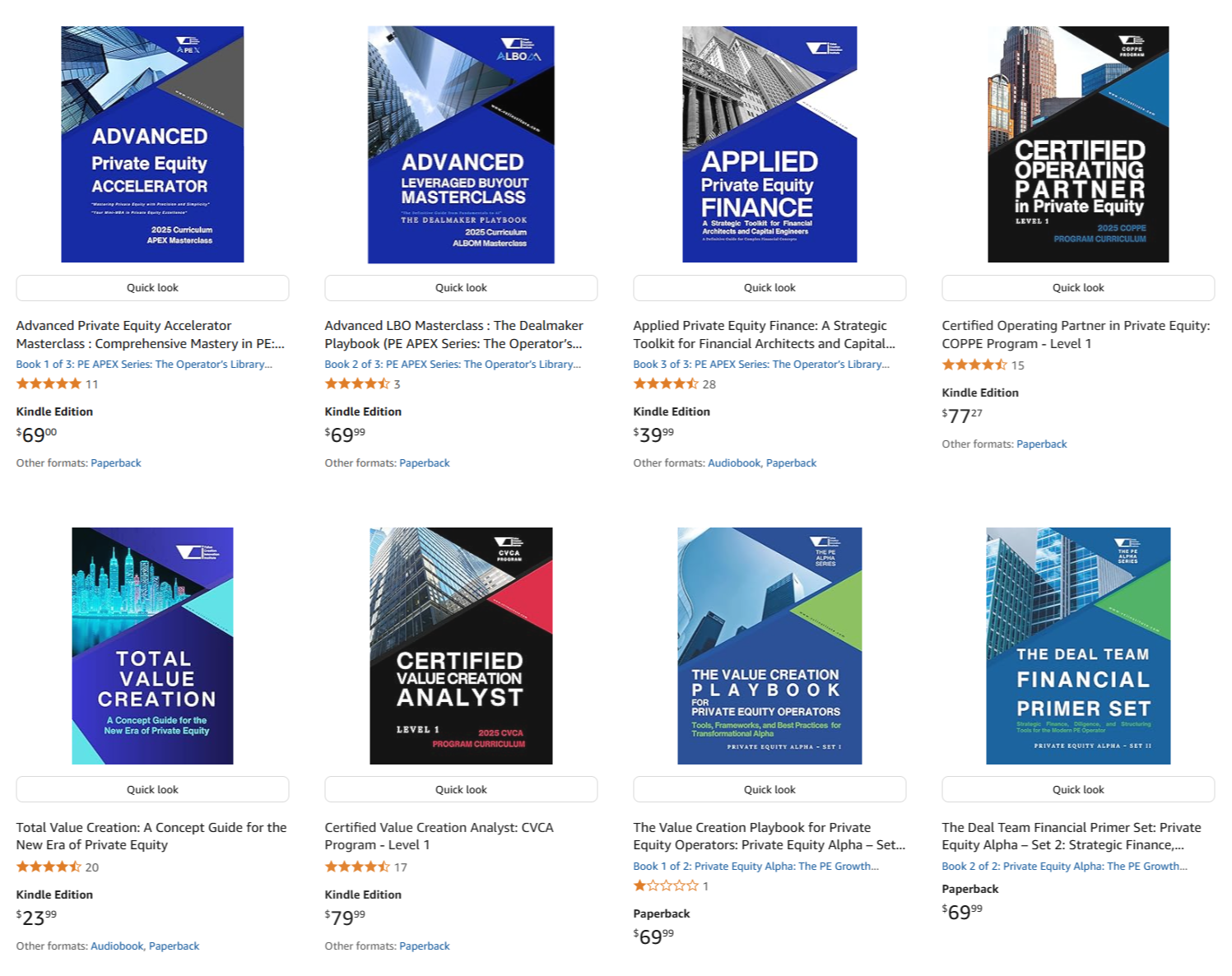

 Practice private equity like a pilot trains